Greatest Opera Singers

Greatest Opera Singers

Thursday, May 28, 2020

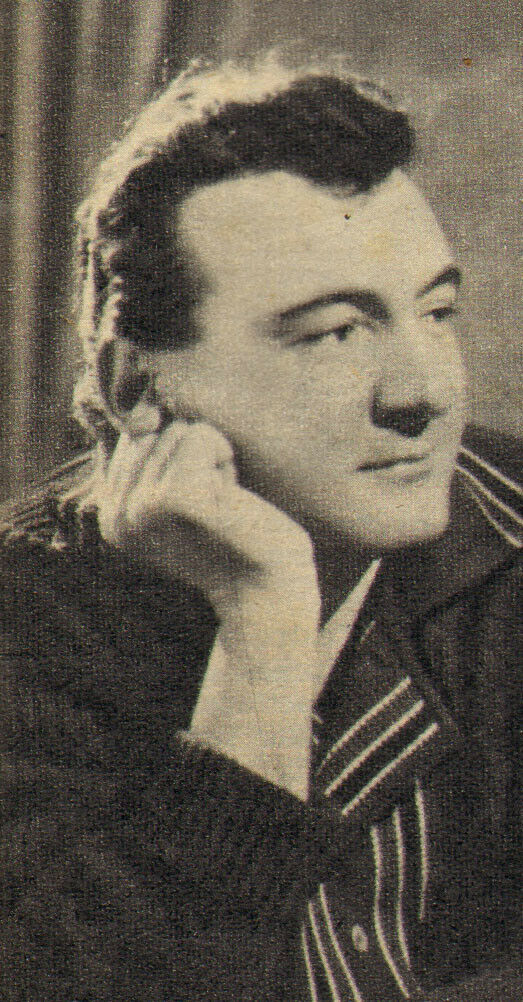
Miroslav Staryckyj (Tenor) (also known as Miroslav Grygorovich Skala-sStaryckyj; alias Miro Skala) (Skala-Podilska, now Borshchiv district of Ternopil region, Ukraine June 13, 1909 - Epine, Suburb of Paris, France February 17, 1969)


He studied in high schools in the cities of Stanislav (now Ivano-Frankivsk) and Lviv. Then he graduated from the Higher Music Institute. M. Lysenko (1939) and the Ukrainian State Conservatory (1941) in Lviv and the Vienna Music Academy (1942). He worked as a soloist at the Ukrainian National Theater named after Ivan Tobilevich, from 1939 to 1941 he was a soloist of the Lviv Radio. He performed his first roles at the Lviv Opera House. He appeared in the cities of Lviv (1941-1942), Kaiserslautern (1943-1944), Vienna (Folksoper, 1945-1947), Madrid (1948), Barcelona (Gran teatro del Liceo, 1948-1949), Paris (Opera Comique, 1949), Lille (1949), Bordeaux (1949, 1950), Zurich (1950), Brussels (Theater Royal de La Monnaie, 1953-1963), San Francisco (1959). From 1940 to 1960 he appeared in solo concerts in Berlin, Munich, Prague, Vienna, Salzburg, Innsbruck, Paris, New York, Detroit, Cleveland, Philadelphia, Chicago), Vancouver, Winnipeg, Edmonton, Montreal, Ottawa, Toronto, Edinburgh, Leicester, London, Manchester, Nottingham, Algeria, Morocco and Tunisia. In 1963 he organized his own music and drama studio, where he taught singing to Ukrainians. He is active in the public-art life of Ukrainian emigration. Miroslav Staryckyj was married to soprano Eugene Lasovskaya.

Saturday, May 16, 2020

Harry Da Garmo (Baritone) (1887 - 1919)


He was the son of a Spaniard and an English woman. He came to Germany to study medicine, where his voice was discovered. He made his debut in 1910 at the Stadttheater (Opera House) in Hamburg, where he stayed until 1912. In the 1912-1914 seasons he sang at the City Theater in Lübeck and since then at the Court Theater in Wiesbaden. He made guest appearances at the major German opera houses, including the Berlin Court Opera in 1911 (as Wolfram in ‘’Tannhäuser’’), the opera houses in Frankfurt am Main and Cologne (1914). In 1914 he married the soprano Tilly de Garmo-Jonas. In the 1917-18 season he was committed to the Metropolitan Opera in New York, but the USA's entry into World War I prevented his appearance in New York. In 1919 he was engaged again by the Metropolitan Opera, but died a few days before the crossing.

Baptist Hoffmann (Baritone) (Garitz 1864 - Garitz 1937)


He studied singing under Louise Weinlich-Tipka in Munich and with Julius Stockhausen inFrankfurt a. M.. He made his debut in 1888 at the Stadttheater in Graz as hunter in "Nachtlager von Granada" by C. Kreutzer. In the 1888-1894 seasons he sang at the Opernhaus in Cologne, then in the 1894-1897 seasons appeared at the Stadttheater in Hamburg. In 1897 he was engaged by the Hofoper  in Berlin and performed till 1919. Here he sang in the premiere of the operas ‘’Briseïs’’ of Emmanuel Chabrier (14. 1. 1899), ‘’Regina’’ of Albert Lortzing (21. 3. 1899), ‘’Cain’’ by E. d'Albert (17. 9. 1900), "Heilmar, der Narr" by W. Kienzl (28. 1. 1902), "Der Wald"  by Mrs Ethel Smyth (9. 4. 1902), "Der Roland von Berlin" by R. Leoncavallo (13. 12. 1904) and in E.Humperdinck’s  "Heirat wider Willen" by (14. 4. 1905). In 1906 he sang in the Berlin première of ‘’Salome’’ by R. Strauss. In 1911 he performed in the premiere of "Rosenkavalier". In 1907 sang the role of Sharpless in G. Puccini’s ‘’Madama Butterfly’’. He made guest appearances in Munich,Dresden, Hamburg, London and Brussels. His extensive repertoire included Nelusco in G. Meyerbeer’s ‘’Africaine’’, Lothario in ‘’Mignon’’ of A. Thomas, Papageno in "Zauberflöte", Wolfram in ‘’Tannhäuser’’, Telramund in ‘’Lohengrin’’, Pizarro in ‘’Fidelio’’. After end of his stage career he worked in Berlin as vocal pedagogue.

Paul Cabanel (Baritone) (29 June 1891, Orán - 05 November 1958, Paris)


First he studied law in Toulouse, but in 1911 he began training his voice at the Conservatory there. He continued this training at the National Conservatory in Paris, but he was drafted as a soldier upon the outbreak of World War I and was wounded at Verdun. He wasn't able to resume his studies until 1919. He made his debut at the Cairo Opera in J. Massenet's ‘’Hérodiade’’, where he also sang in ‘’Manon’’ and ‘’Thaïs’’ as well as in C. Gounod's ‘’Faust’’. Until 1932 he appeared at the French provincial houses, in Belgium and in Switzerland; for seven years he sang every winter at the Bordeaux Opera and in summer at the Vichy Theatre. Finally in 1932 he was able to make his debut as Scarpia in ‘’Tosca’’ at the Opéra-Comique in Paris, and in the following year at the Grand Opéra in ‘’La damnation de Faust’’ by H. Berlioz. After that he had great success at the Grand Opéra as well as at the Opéra-Comique in Paris. His signature roles included Mephisto in ‘’La damnation de Faust’’, Leporello in ‘’Don Giovanni’’, the High Priest in ‘’Samson et Dalila’’ and Arkel in ‘’Pelléas et Mélisande’’. He is said to have sung the role of Mephistopheles in C. Gounod's ‘’Faust’’ more than a thousand times. Guest appearances led him to the Teatro Colón Buenos Aires (1939) and to the opera of Rio de Janeiro, to the Teatro Liceo Barcelona, to Amsterdam and above all at the Brussels Opera (Théâtre de la Monnaie). Here he sang Boris Godunov as late as 1954. In 1952 he took part in a concert performance of ‘’La damnation de Faust’’ at the Holland Festival. He also worked as an opera director. From 1942 to 1958 he held the rank of professor at the National Conservatory in Paris.

Paolo Silveri (Baritone) (Ofena, 28 December 1913 – Rome, 3 July 2001)


He began his education with Perugini in Milan, then studied singing under Riccardo Stracciari at the Conservatorio Santa Cecilia. He made his debut in 1939 at the Teatro dell'Opera di Roma as Hans Schwarz in R. Wagner’s ‘’I Maestri cantori di Norimberga’’. His real debut was happened as baritone in 1944 at the Teatro dell'Opera di Roma as Germont in ‘’La Traviata’’.


Chronology of some appearances


1939 Roma Teatro dell'Opera I maestri cantori di Norimberga (Hans Schwarz)
1940 Roma Teatro dell'Opera Guglielmo Tell (Melchtal)
1940 Roma Teatro dell'Opera Conchita  (Tonio/Sereno)
1941 Roma Teatro dell'Opera Siberia (governatore)
1942 Roma Teatro dell'Opera Orsèolo (vecchio senatore/3°servo)
1943 Roma Teatro dell'Opera Khovanshcina (2°strelez/pastore)
1944 Roma Teatro dell'Opera La Traviata (Germont)
1945 Roma Teatro dell'Opera Falstaff (Ford)
1949 Milano La Scala Trovatore (count di Luna)
1949 Genova Teatro Carlo Felice Il candeliere (presidente)
1949 Milano La Scala Favorita (Alfonso)
1950 Milano La Scala I Puritani (Sir Riccardo-Richard Forth)
1953 Firenze Teatro Comunale Trovatore (conte di Luna)
1953 Roma Teatro dell'Opera Otello (Jago)
1955 Roma Teatro dell'Opera Il principe Igor (Igor)
1956 Parma Teatro Regio Otello (Jago)
1956 Roma Teatro dell'Opera La fiamma (Basilio)
1968 Budapest Hungarian State Opera House Rigoletto (Rigoletto)

Johanna Gadski (Soprano) (Anklam, Prussia 15 June 1872 – Berlin, Germany 22 February 1932)


Johanna Emilia Agnes Gadski. She was blessed with a secure, powerful, ringing voice, fine musicianship and an excellent technique. These attributes enabled her to enjoy a top-flight career in New York City and London, performing heavy dramatic roles in the German and Italian repertoires. She made her debut at the Kroll Opera in Berlin (1894), Covent Garden (1898), Metropolitan Opera (1900), Munich (1905), Salzburg (1917); became leader of Wagnerian touring company (1920s). Johanna Gadski was one of the first Victor Red Seal artists and made almost 100 recordings during her career. Singing in Germany between 1889 and 1895, she debuted at age 17 in Lortzing's Undine at the Kroll Opera in Berlin. When she joined New York's Metropolitan Opera in 1900, she became one of the company's leading Wagnerian sopranos although she performed Mozart and Mahler ably as well. Also a recitalist, Gadski was one of the few to include songs by American composers on her program. An extremely popular recitalist, Gadski was much loved by audiences but fared less well with critics who complained that her pitch varied, her interpretation was flawed, and that she had a limited emotional range. Numerous recordings, however, demonstrate that she had a large voice with a pure tone. Her recordings, in fact, are considered classics. Gadski was forced to discontinue her American career during World War I due to anti-German sentiment, but she returned as a popular performer after the Armistice. She formed her own Wagnerian touring company in the 1920s which performed in Europe and the United States. Johanna Gadski died in an auto accident on February 22, 1932. Records kept her voice alive, giving Gadski a much deserved reputation—far greater than the one she enjoyed in her lifetime.

Monday, January 20, 2020

Julius Pölzer (Tenor) (Admont, Austria 9. 4. 1901 - Wien, Austria 16. 2. 1972)


He first studied dentistry. After he became aware of his beautiful voice, however, he decided to pursue a career in singing and was trained by Theo Lierhammer in Vienna and Anna Bahr-Mildenburg in Munich. After his first success at the Breslau Opera House, he came to the Bavarian State Opera (1930). For more than twenty years he remained their celebrated first tenor for the heroic and especially for the Wagner operas. As early as 1930, he participated in the premiere of Julius Weismann's "Gespenstersonate". At the Vienna State Opera he was heard in his major roles in the 1933-1934 seasons. From 1937 to 1942 and again in the 1947-1948, 1951-1953 seasons he appeared also at the Vienna Volksoper. Since 1935 there has been a guest performance at the State Opera in Dresden. Guest performances have taken him to other theaters in Germany and abroad. In 1933 he made guest appearances at the Frankfurt am Main Opera House, in 1935 at the Grand Opéra in Paris (as Tristan), in 1936 at the Sopot Festival (as Parsifal), in 1942 at the Berlin State Opera (as Herod in "Salome" by R. Strauss). In 1936 he performed with the Ensemble of the Dresden Opera at the Covent Garden Opera in London as Tristan. In 1947 he was heard at the Grand Théâtre in Geneva; In 1949 he sang in R. Wagner’s "Rheingold" in a performance of the Ring Cycle in the Austrian radio. He also appeared as a concert singer. After completing his career, he worked again as a dentist.

Janko Blaho (Tenor) (Skalica, Slovakia September 15, 1901 - Bratislava, Slovakia April 24, 1981)


He began studying law at the University of Prague, which he graduated and received a Dr. jur. doctorate. He trained his voice by Ms. Ch. Morfová in Prague and later continued his education in Milan. In 1926 he made his debut at the Bratislava Opera House (Pressburg) as Alfredo in ‘’La Traviata’’ and then from 1927 to 1955 he was one of the leading members of this opera house, where he appeared on stage in more than a hundred roles. His guest appearances at the National Opera Bucharest, at the Volksoper Vienna and at the Prague National Opera, were very successful. In addition to his work on the opera stage, he developed a second career as a concert singer, whose repertoire included Beethoven's 9th symphony, ‘’La Damnation de Faust’’ by H. Berlioz, Stabat mater and the requiem by A. Dvorák. In 1957 he undertook a glamorous concert tour through China. From the 1950s until 1973 he worked as a teacher at the Music Academy in Bratislava. His operatic repertoire included Duke in ‘’Rigoletto’’, Riccardo in ‘’Ballo in maschera’’, Rodolfo in ‘’La Bohème’’, Cavaradossi in ‘’Tosca’’, Don Ottavio in ‘’Don Giovanni’’, Pinkerton in ‘’Madama Butterfly’’, Schuiski in ‘’Boris Godunov’’, Don Jose in ’’Carmen’’, Hans in B. Smetana's ‘’The Bartered Bride’’, Luke in ‘’Tajemstvì’’ and Podhajsky in ‘’Dve vdovy’’.

Carlo Franzini (Tenor) (Milan 21 April 1923 - Cinisello Balsamo 27 January 2003)


He was born in Milan on April 21, 1923, the eldest of three brothers of Giovanni Franzini and Teodolinda Mapelli. He studied painting with Aldo Carpi at the Accademia di Brera and in 1948 he moved to Paris where, he attend the old Matisse. In 1951 he returned to Italy to participate in an opera competition for new voices and won it. His official debut in the world of opera took place in 1951 at the Teatro Nuovo in Milan in Felice Lattuada’s opera "The precious ridiculous" by and continued his theatrical activities until 1974. He worked with the symphonic orchestras of Rai and the Accademia Nazionale di Santa Cecilia, singing as a soloist under the direction of Mario Rossi, Vittorio Gui, Alfredo Simonetto, Lovro Von Matačić, Riccardo Chailly and others. In 1966 he recorded for the Decca the ballet "Pulcinella" by Igor Stravinsky, with the Orchester de la Suisse Romande conducted by Ernest Ansermet. In 1972 he underwent a criminal trial for slapping the concert master during the rehearsals of Strawinsky's opera "Mavra" at the Teatro San Carlo in Naples. He also was a well known painter, who used the pseudonym Saturnino. Struck by a heart attack he died on January 27, 2003 at the Bassini hospital in Cinisello Balsamo.

Štefan Hoza (Tenor) (Smižany, Slovakia October 20, 1906 - Czechoslovakia April 6, 1982)


He studied singing in Prague (1932), Milan (1933) and Vienna (1936). Since 1932 he was soloist of the Slovak National Theater in Bratislava. Here he sang the whole repertoire of heroic tenor over the course of a decade-long career. In Bratislava he participated in several world premieres of the operas by Eugen Suchon and Ján Cikker, including ‘’Krútňava’’ by E. Suchon (1949), "Juro Jánošík" (1954) and "Beg Bajazid" (1957) by Cikker. He became very popular for his appearance in classical operettas, especially in the role of Prince Sou Chong in Lehár's "Land des Lächelns". He also worked as a dramaturge and librettist and wrote a very readable, two-volume "History of Slovak Opera". Also his work as an opera director and as a teacher in the Slovakian capital Bratislava should not be forgotten.

Antonio Vargas (Baritone)


He was one of the first Mexican opera singers, who made records in USA. In the 1890’s he appeared in Italy, Australia and USA. In 1898 he became a member of the Car Rosa Opera Company, with whom he toured in Australia. The same year he immigrated to USA. Here he performed as Count di Luna in ‘’Trovatore’’ (Los Angeles Theater, 1898). In 1899 he sang at the Hopkins Art Institute and at the Orpheum Theater in Los Angeles. The next year he appeared with Lombardi Opera Company. At the Fischer’s Concert House, opposite Thomas Shepard, he participated in concert (1900). He made records for Zonophone, Victor and Edison. In 1902, for a short time, he changed to tenor and made opera arias and songs for Edison, but the next year returned to his standard baritone repertoire.

Tuesday, September 24, 2019

Roberto Rotondo (Tenor)


He made his debut in Italy, then went to USA. In 1921 he appeared at the Aeolian Hall in New York opposite Riccardo Stracciari, Giulia Grilli and Margita De Re. In 1922 he sang as tenor in Paramount Pictures. In 1924 he performed at the Teatro San Carlo in Napoli in ‘’Traviata’’ and ‘’Tosca’’ . Probably he had a short career. He made recordings/songs for Vocalion, Victor, Columbia and Pathé.

Chronology of some appearances

1924 Napoli Teatro San Carlo Traviata (Alfredo)
1924 Napoli Teatro San Carlo Tosca (Cavaradossi)

Monday, September 23, 2019

Ugo Cantelmo (Tenor) (Lecce, Italy 01 Apr 1904 - 13 Dec 1980 Milan, Italy)


First he received his education at the University of Rome
He studied singing under Emilio Piccoli in Milan
In 1929 he made his stage debut at the Teatro Adriano in Rome as Turiddu in ‘’Cavalleria Rusticana’’
He retired from the stage in 1941
He recorded opera arias and songs for Disco Grammofono

Chronology of some appearances

1929 Roma Teatro Adriano Cavalleria Rusticana (Turiddu)
1931 Roma Teatro Adriano Barbiere di Siviglia (Almaviva)
1932 Macerata Teatro Lauro Rossi Boheme (Rodolfo)
1932 Macerata Teatro Lauro Rossi Cavalleria Rusticana (Turiddu)
1932  Genova Teatro Margherita Rigoletto (Duca)
1932 Genova Teatro Paganini Rigoletto (Duca)
1932 Genova Teatro Paganini Traviata (Alfredo)
1932 Genova Teatro Margherita Tosca (Cavaradossi)
1932 Genova Teatro Margherita Traviata (Alfredo)
1932 Genova Teatro Modena Tosca (Cavaradossi)
1932 Genova Teatro Modena Traviata (Alfredo)
1932 Genova Teatro Paganini Tosca (Cavaradossi)
1933 Forlì Teatro Comunale Boheme (Rodolfo)
1933 Forlì Teatro Comunale Cavalleria Rusticana (Turiddu)
1938 Busto Arsizio Spazio Nuova Piscina Comunale Barbiere di Siviglia (Almaviva)
1940 Messina Teatro Savoia Rigoletto (Duca)
1941 Palermo Teatro Biondo Don Pasquale (Ernesto)

Tuesday, September 17, 2019

Paul Schwarz (Tenor) (Vienna, Austria 1887, 30/6 – Hamburg, Germany 1980, 24/12)


He made his debut at the Stadttheater in Bialitz in 1909, went on to the Vienna Volksoper, and in 1912 joined the Hamburg Opera, where he remained until 1933. In  Hamburg he appeared in over 4000 performances of 145 roles. Although he sang such leading roles as Manrico in Il Trovatore and Turiddu in Cavalleria Rusticana, he was extensively utilized as a comprimario. He specialized in such roles as David in Die Meistersinger, Pedrillo in Die Entführung aus dem Seraglio, and Don Basilio in Le Nozze di Figaro. Although his center was Hamburg, he also frequently sang in Berlin, Vienna, Amsterdam, and Paris. In addition, he also had great success as an operetta singer. Because of the Nazis, he was forced to leave the Hamburg Opera in 1933 and emigrated to the United States. At the end of the War, he returned to Hamburg and in 1949 appeared again at the Opera as Basilio. Schwarz died in Hamburg in 1980, at the age of 93.

Saturday, September 14, 2019

Felix Senius (Tenor) (Konigsberg, Germany 19-09-1868 - Konigsberg, Germany 01-10-1913)


In 1872 his father became director of the Azov Commercial Bank in St. Petersburg, where the artist spent his youth. He entered his father's bank, but already in 1895 gave charity concerts in St. Petersburg. After studying singing with Ippolit Pryanishnikov in St. Petersburg (1900), he gave his first recitals in the Russian metropolis and sang the tenor solo in a performance of the "Messiah" by Handel. Glittering concerts took place in the big cities in Russia, Germany, Sweden and Finland. He moved to Berlin and became one of the most important concert tenors of his time; One saw in him the successor of Gustav Walter. In the 1905-1911 seasons he performed in concerts in Vienna. In 1906 he appeared in Brno, in 1911 he sang in Prague. In England he was admired mainly in "L'Enfant prodigue" by Debussy and "The Dream of Gerontius" by E. Elgar. In 1910 he participated in the world premiere of the 8th Symphony ("Symphony of the Thousand") by Gustav Mahler in Munich. He died after being poisoned by fish at a banquet given by the city of Königsberg. He was married to the soprano Clara Senius-Erler, who later worked as a lecturer at the Conservatory of Leipzig and still appeared in concerts in 1918. His brother, Rudolf Senius (1865-1924), worked as an operetta singer and as a director. 

Miklos Gafni (Tenor) (Tiszacsege, Hungary 1923. 05. 28 – Queens, New York City 1981. 03. 08)


When the Nazis took over Hungary, Gafni was put into a concentration camp and condemned to death. He and others in the  camp similarly awaitng death engaged in musical activities, and Gafni studied voice with one of his fellow-prisoners. The commandant of the camp was a music lover, and hearing Gafni sing, introduced him to German Lieder. He also spared Gafni from his ultimate fate, allowing him to survive the War. Still young, he returned home after the War and money was raised to send him to Italy to study. His teachers were Riccardo Stracciari and Aureliano Pertile, two of the finest singers of pre-War Italy. Gafni also received encouragement from Beniamino Gigli, and began to concertize in Italy. He then received concert engagements in England, Australia, and South Africa. He finally came to the United States, where he made his debut at Town Hall with great success, receiving the common accolade, "the young Caruso". His greatest claim to fame was in recording the first complete La Juive by Halevy, sponsored by a Jewish-American organization. Because of a limited operatic repertoire and technical deficiencies in his singing, he was not offered a contract with any major opera company, and returned to Hungary about 1960, where he is believed to have continued his vocal career.

Tuesday, August 27, 2019

Ugo Ugaro (Baritone) (Italy 1914 – Paris, France 4 December 1999)


His real name was Ugo Garbaccio. In 1936 he made his debut in concert at the Teatro La Fenice in Venezia. In 1945 he appeared at the Grattacielo and at the Splendor a San Pier d'Arena in Genova. I think in Italy he participated only in concerts. Later he went to France and under the name Ugo Ugaro performed at the provincial opera houses. His repertoire included Scarpia in ‘’Tosca’’, Rigoletto, Nelusko in ‘’Africana’’, Tonio in ‘’Pagliacci’’, Figaro in ‘’Barbiere di Siviglia’’ and Renato in ‘’Ballo in maschera’’. After his retirement, he taught singing in Paris and among his pupils was bass-baritone Michael Vier. He made a few records for Pacific in Paris.

Chronology of some appearances

1936 Venezia Teatro La Fenice Concert
1945 Genova Grattacielo Concert
1945 Genova Splendor a San Pier d'Arena Concert

Harry Lambert Murphy (Tenor) (Springfield, Massachusetts 1 April 15, 1885 – Hancock, New Hampshire July 25, 1954)


He was a Harvard University student and sang in a university choir. In 1908 he finished his scientific studies. On the advice of tenor Riccardo Martin he studied singing under Isadore Luckstone and Herbert Witherspoon. He became a soloist of St. Bartholomew's Church in New York and appeared at the concert hall in 1908 with the Boston Festival Orchestra and the Handel and Haydn Society. His stage debut was in 1911 at the Metropolitan Opera in New York as young sailor in "Tristan und Isolde" under Arturo Toscanini. A day after his debut, he participated at the Metropolitan Opera in the American premiere of the opera "Lobetanz" by Ludwig Thuille. Until 1914 he remained at the Metropolitan Opera, where he participated in various premieres: in 1912 in the American premiere of "Le Donne curiose" by Wolf Ferrari, in 1913 in the premiere of "Cyrano de Bergérac" by Damrosch, the same year in the first performance of the "Rosenkavalier", in 1914 in the premiere of Charpentier's "Julien" as a partner of Enrico Caruso and Frances Alda. After 1914 he appeared as a concert and oratorio singer and was one of the leading performers in North America. In the 1930’s he appeared in many concerts and especially valued as an evangelist in the passions of J. S. Bach; the Dutch oratorio singer Tom Denijs described him as the best evangelist he had ever heard. Around 1940, after a larynx surgery, he retired and since then worked as teacher at the Malkin Conservatory in Boston.

Chronology of some appearances

1911-1914 New York Metropolitan Opera

Friday, August 23, 2019

Mischa Léon (Copenhagen, Denmark 1889 – USA ? April 7, 1926)


His real name was Harry Haurowitz. He studied singing under Jean De Reszke, Devillier and Reinhard. Probably he made his debut in 1918 at the Opéra-Comique in ‘’Roméo et Juliette’’ as Romeo. In Brno he studied Leoš Janáček's ‘’The Diary’’ with Břetislav Bakala and sang in the original Czech (1922). First he appeared in the British premiere at Wigmore Hall in London (22 October, 1922), then sang in the French premiere at the Paris Conservatory. He toured the USA and Europe and performed as Don José in ‘’Carmen’’ at the National Theater in Prague. Also gave a recitals in Denmark. He was the second husband of the well-known Canadian soprano Pauline Donalda.

Tuesday, August 20, 2019

Frans Vroons (Amsterdam, Netherlands April 28, 1911 - ’S-Hertogen-Bosch, Netherlands June 1, 1983)


He studied with Berthe Seroen in Amsterdam, later also in Paris. Already as a student he sang at the Amsterdam Wagner Association and in student appearances of the Conservatory in Amsterdam. In 1938 he appeared as Don Curzio in "Figaros Hochzeit" under Bruno Walter in Amsterdam. In 1939 he sang in Scheveningen the part of Don Basilio in the same opera under Carl Schuricht. In 1941 he became a principal tenor of the Dutch Opera in Amsterdam and in the opening performance he performed in Wagenaar's "Doge van Venetië". After the Second World War he became internationally known; he sang at the Grand Opéra and at the Opéra-Comique in Paris, at the Covent Garden Opera in London (1948-1950). In North America he was heard at the New York City Center Opera as De Grieux in "Manon" by J. Massenet and as Hoffmann in ‘’Les Contes d'Hoffmann’’. At the San Francisco Opera he appeared opposite Bidu Sayão in "Manon" (1951). He created the title role in Benjamin Britten's "Peter Grimes" for Holland (1955) as well as at the Grand Théâtre de Bordeaux. At the Holland Festival he sang the part of Hüon in "Oberon" (1950). In 1960 he appeared in the premiere of the opera "Martin Korda" by Henk Badings. Later he became co-director of the Dutch Opera (1956-1971), where he also worked as director of the opera school. He took up residence in Vught near s'Hertogenbosch and worked in Utrecht, s'Hertogenbosch and in the Hague.